2004 Prius Battery Replacement: A Comprehensive Guide
The Toyota Prius, launched in 2004, pioneered hybrid vehicle technology, with its innovative battery system playing a crucial role. The Prius 2004 battery, also known as the NiMH battery pack, was a significant leap forward from traditional lead-acid batteries.
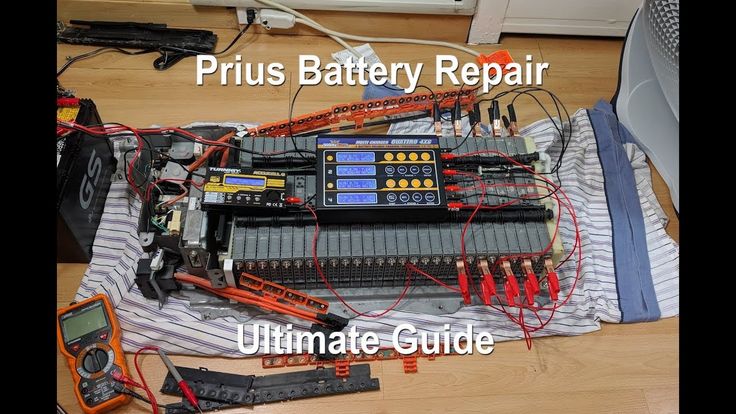
This powerful, compact battery pack consisted of 28 individual modules, each containing a set of flattened, stacked cells connected by busbars. This modular design was engineered to provide redundancy and enhance safety.
Understanding the NiMH Battery Technology
The Prius 2004's battery pack employed Nickel-Metal Hydride (NiMH) technologies, which offer higher energy density and rechargeability compared to lead-acid batteries.


NiMH batteries use a metal alloy for the negative electrode and nickel hydroxide for the positive electrode. They provide around 30% more energy per unit weight than lead-acid batteries, enabling the Prius to achieve impressive fuel efficiency.
Benefits of NiMH Batteries in the Prius
NiMH batteries offer several advantages, including lighter weight, better endurance, and reduced environmental impact. This made them an ideal choice for the Prius' hybrid powertrain.


The lighter weight of NiMH batteries contributed to the Prius' lower curb weight, improving its handling and overall efficiency. Additionally, their high energy density allowed the Prius to deliver impressive acceleration while maintaining a higher cruising speed.
Overcoming Challenges with NiMH Batteries
Despite their advantages, NiMH batteries come with their own set of challenges, such as reduced durability and self-discharge rate issues. To address these, Toyota employed advanced battery management systems in the Prius.
These systems included advanced algorithms for battery state-of-charge estimation and thermal management for consistent performance and longevity. Additionally, the Prius' regenerative braking system aided in maximizing battery life.



Regenerative Braking System in the Prius 2004
The regenerative braking system in the Prius was designed to capture and convert kinetic energy lost during braking back into electrical energy, extending the battery's life and improving fuel efficiency.
This system worked in tandem with the NiMH battery, allowing the Prius to-ranked, 121.7 mpg in the EU5 test cycle.
How Regenerative Braking Works in the Prius
During braking, the Prius' electric motor acts as a generator, converting the kinetic energy from the vehicle's motion into electrical energy. This energy is then stored in the NiMH battery, ready for use when required.


The regenerative braking system is seamlessly integrated into the Prius' driving dynamics. The transition between coasting, regenerative braking, and traditional friction braking is almost imperceptible to the driver.
In conclusion, the Prius 2004's battery system was a trailblazer in automotive history, demonstrating the practical benefits of hybrid technology. Its compact, powerful NiMH battery pack, combined with an innovative regenerative braking system, laid the groundwork for future hybrid and electric vehicle generations. As we continue to adopt cleaner, more efficient technologies, understanding the Prius' foundational innovations becomes increasingly relevant."
Related Articles

2014 Chevrolet Spark Battery Replacement: A Comprehensive Guide
When it comes to compact cars that punch above their weight, the 2014 Chevrolet Spark is a name that often surfaces. This subcompact is not just about saving...

2002 Ford Taurus Battery Replacement: A Comprehensive Guide
When it comes to keeping your car on the road, few components are as crucial as your vehicle's battery. For 2002 Ford Taurus owners, understanding your...

2004 Buick Lesabre Battery Replacement: Best Options & Guide
In the quest to maintain and enhance the performance of your 2004 Buick LeSabre, selecting the right battery proves instrumental. This guide delves into...

"2004 Toyota Sequoia Fuel Pump Replacement: A Comprehensive Guide"
If you're the proud owner of a 2004 Toyota Sequoia, you likely appreciate its rugged capabilities and spacious interior. However, even the most reliable...

Prius C Battery Replacement: Ultimate Guide
The Toyota Prius c, a compact hybrid vehicle, is known for its fuel efficiency and low emissions. However, like any other car battery, the Prius c's battery...

2004 Toyota Highlander Gas Cap Replacement: A Comprehensive Guide
The Toyota Highlander, a versatile SUV known for its reliability and practicality, was introduced in 2000. In 2004, Toyota refreshed the Highlander with a...