Indian Command Map: Unveiling Power Dynamics in Real-Time
The Indian Command Map, a compendium of orders issued by Indian military headquarters, is not just a navigational tool, but a strategic document that provides comprehensive insights into India's defense planning, operations, and policies. Understanding its intricacies can offer valuable perspectives intoéen the world's seventh-largest army by troop numbers.
This map and its accompanying documents are designed to streamline military decision-making, improve interservice coordination, and enhance joint operations capabilities. By delving into its contents, we can unlock a trove of information about India's defense strategies and its approach to regional security dynamics.
Understanding the Indian Command Map
The Indian Command Map is a culmination of instructions, guidelines, and policies issued by the Integrated Defence Staff (IDS), a tri-service agency of the Indian Armed Forces. It aims to provide a unified command structure and facilitate synergized operations among the Army, Navy, and Air Force.


At its core, the map represents more than just geographical coordinates; it's a visual representation of India's defense doctrine, reflecting its geostrategic priorities, and outlining its operational preparedness and response capabilities.
Evolution of the Indian Command Map
The evolution of the Indian Command Map mirrors the country's changing defense landscape and evolving security challenges. From its inception post-Independence to the contemporary era marked by multi-domain threats and theatre commands, the map has continually adapted to keep pace with India's defense modernization and strategic shifts.


Notable milestones in this evolution include the creation of thealak Command in 1972, the Dual Command concept in the 1980s, and the tri-service Andaman and Nicobar Command in 1984. The most recent development is the establishment of the theatre commands, a process still in progress
Key Components of the Indian Command Map
The Indian Command Map encapsulates several key components that underscore India's commitment to territorial integrity, national security, and regional cooperation. Some of these components include:
- Command Headquarters: The map delineates the operational boundaries and jurisdictions of the Army, Navy, and Air Force command headquarters, ensuring clear lines of responsibility and authority.
- Theatre Commands: In line with global trends, India is transitioning towards theatre commands, which will encompass all three services and enhance jointness and interoperability.
- Integrated Defence Sropholders: These form the nerve centers of India's defence communication network, facilitating real-time data exchange and enabling swift decision-making.
India's Defense Doctrine and the Command Map
The Indian Command Map is a tangible manifestation of India's defence doctrine, which emphasizes self-reliance, military preparedness, and regional cooperation. It reflects India's strategic thought and provides objective criteria for assessing its defense capabilities and preparedness.


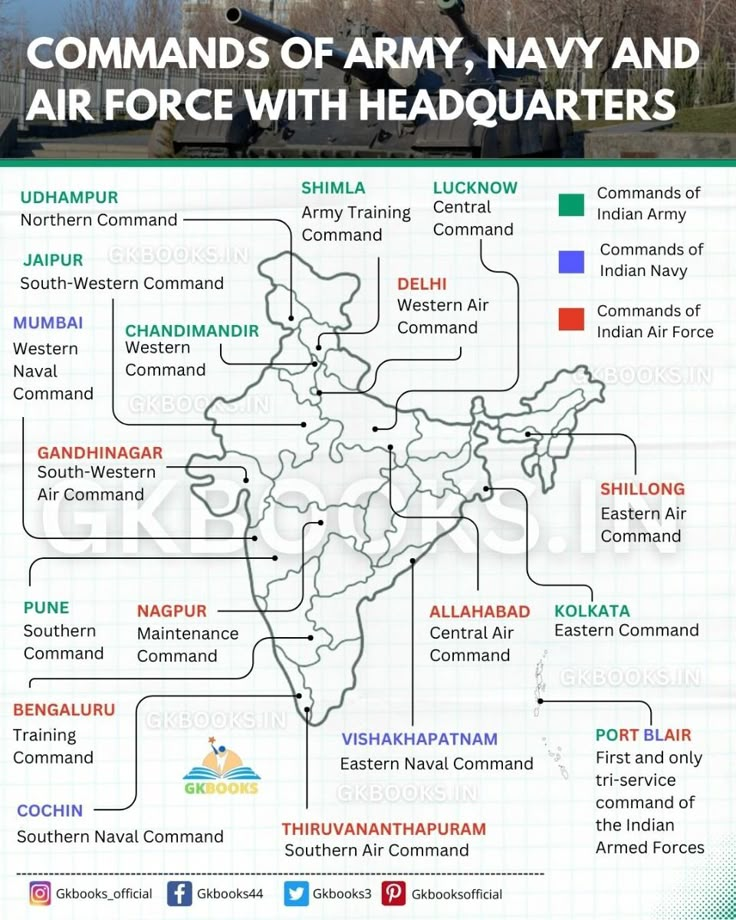


By interpreting the map, we can glean important insights into India's approach to defense planning, including its focus on credible minimum deterrence, avoidance of arms races, and maintenance of strategic autonomy. Moreover, it underscores India's commitment to UN peacekeeping, counterterrorism, and humanitarian assistance and disaster relief operations.
Strategic Implications and Future Prospects
The Indian Command Map holds significant strategic implications, both for India and the region. It signals India's resolve to protect its territorial integrity and sovereignty, while also serving as a deterrent against external threats. Furthermore, it demonstrates India's willingness to engage with regional powers, fostering dialogue and cooperation.
Moving forward, the map's effectiveness will be tested by emerging challenges, including marcouas like artificial intelligence and cyber warfare, and intensified geopolitical tensions. Future iterations of the map will likely reflect India's responses to these challenges, as well as its efforts to enhance jointness, integration, and interoperability among the three services.


Exploring the intricacies of the Indian Command Map provides a unique perspective on India's defense strategies, regional security dynamics, and military modernization. As India continues to navigate an evolving geopolitical landscape, so too will its Command Map, offering valuable insights into the world's second-most populous nation's defense priorities and strategic thought.
Related Articles

Mastering Real-Time Strategy: Unveiling the Power of the Lift Line
When it comes to ski resorts, there's one phrase that's sure to pique the interest of avid skiers and snowboarders alike: "rts lift line." But what does it...

Adv1 Ferrari F12: Unveiling the Power of Evolution
The Ferrari F12 Berlinetta, often simply referred to as the F12, is a masterclass in Italian craftsmanship and engineering. Launched in 2012, this...

TGB Blade 1000: Unveiling Power in Every Strike
The TGB Blade 1000, a high-end electric toothbrush from TGB Dental, has taken the oral care market by storm with its innovative features and exceptional...

K5 Blazer Barrett Jackson: Unveiling the Power at Auction
The Barrett-Jackson auctions, renowned for their exquisitely curated collections, recently turned heads with the presentation of a stunning 1955 Chevrolet®...

1993 Corvette Specs: Unveiling Power & Features
The 1993 Chevrolet Corvette, affectionately known as the C4, was a sportscar that truly defined its era. This iconic American muscle car brought a perfect...

2009 Lexus IS 250 0-60: Unveiling Power Secrets
The 2009 Lexus IS 250, a mid-size luxury sedan, was praised for its striking design, impressive performance, and upscale interior when it hit the roads. Among...