Civic Type R Roll Race: street legal drift showdown
The Civic Type R's reputation as a hot hatch icon is undeniable, but what sets it apart is not just its credentials on paper, but how it performs in the real-world, specifically on the track. One aspect that drives enthusiasts is the question: how does it fare in a roll race, a test of acceleration and driver skill? Let's delve into the world of Civic Type R roll races, exploring its performance, the science behind it, and some record-setting endeavors.
Before we dive in, let's clarify what a roll race is. In its simplest form, it's a race where two or more vehicles start from a rolling start, without coming to a complete stop, testing their acceleration and driver skills. It's a test of power, handling, and driver prowess, all rolled into one.
The Civic Type R's Roll Race Capabilities
The Civic Type R's roll race capabilities are a testament to Honda's engineering prowess. The Type R's performance is not solely about power, but the harmonious balance of power, weight, aerodynamics, and handling.

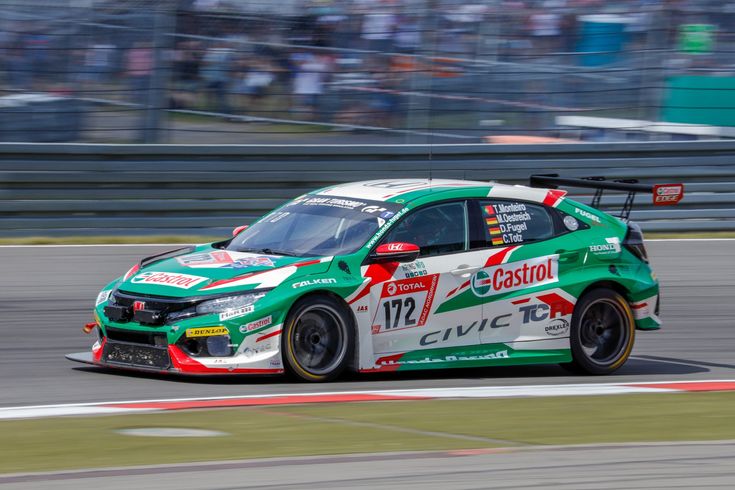

The Type R's 2.0-liter VTEC turbocharged engine produces 306 horsepower and 295 lb-ft of torque. This power, combined with its lightweight chassis (around 2,800 lbs), low center of gravity, and advanced suspension, enables it to churn out impressive roll race times.
The Role of Weight Distribution and Aerodynamics
Weight distribution is key in a roll race. The Type R's perfect 60:40 front-to-rear weight distribution ensures precise handling and quick response to driver inputs. Moreover, its aggressive front bumper and rear spoiler aren't just for aesthetics; they help in downforce and stability, aiding roll race performance.


For instance, on the Nordschleife, a high-speed track, the Civic Type R's aerodynamics help it maintain stability at speeds above 165 mph, a feat that aids in impressive roll race times.
Gearing and Launch Control
The Type R's six-speed manual transmission, with its ultra-short throw, allows for quick gear shifts, crucial in a roll race. The launch control feature allows the driver to achieve maximum acceleration from a standing start, or in this case, a rolling start.
To use launch control, the driver simply holds the clutch down, engages first gear, revs the engine to 3,000 rpm, releases the clutch, and the Type R takes care of the rest, ensuring the most efficient and quickest possible launch.


The Record-Breaking Civic Type R Roll Races
The Civic Type R has set numerous record-breaking roll races, from the Nurburgring to the drag strip.
In 2018, a stock Civic Type R set a new front-wheel-drive record at the Nurburgring Nordschleife, with a time of 7:43.8. Impressive, given that it's a road-going, daily-driven car, not a purpose-built racer.
Rolling Drag Races
The Civic Type R's roll race prowess isn't confined to circuits. On the drag strip, the Type R's launch control helps it maintain its traction and momentum, often leaving its rear-wheel-drive counterparts in the dust.


In a roll race against a Ford Mustang GT, the Civic Type R managed to keep pace with the American muscle car, thanks to its quick acceleration off the line.
Media-Produced Roll Races
Automotive media often pit the Civic Type R against other hot hatches in roll races. In these tests, the Type R consistently proves its worth, demonstrating its outstanding acceleration, handling, and versatility.
For instance, in a roll race against the Ford Focus RS, the Civic Type R managed to outpace the Ford, thanks to its superior grip and stability during high-speed cornering.
As the automotive scene evolves, the Civic Type R continues to push boundaries, setting new benchmarks in roll race performance. Its combination of power, precision handling, and advanced technology makes it a formidable competitor, both on the track and on the road. So, the next time you see a Type R at the lights, don't be surprised if it leaves other cars behind, even from a roll.
Related Articles

Street Legal Indy Race Car
Picture this: the thrill of racing, the roar of engines, and the adrenaline rush of competition, all packed into a vehicle you can drive home. Welcome to the...

CRX vs Civic Hatchback: Cargo Capacity Showdown
The Honda CRX and the Civic Hatchback have long been favorites in the compact car segment, each offering a unique blend of practicality, performance, and...

Mustang vs Charger: The EPIC Drag Race Showdown
When it comes to iconic American muscle cars, two names often rise to the top of the list: Mustang and Charger. Both have left indelible marks on automotive...

Indian Chieftain vs Harley Street Glide: Classic Showdown
The Indian Chief and the Harley Street Glide are two iconic motorcycles that have left an indelible mark on the annals of motorcycle history. Each representing...

Formula Drift 2017: Texas Showdown
The motorsports scene in 2017 witnessed an adrenaline-fueled spectacle in Texas, with the annual Formula Drift championship bringing its high-speed...

Civic Type R Wheel Size: A Complete Guide
When it comes to looking for the perfect wheel size for your Civic Type R, you might find yourself overwhelmed with the sheer number of options available. From...